
Heat — the gas side
A new boiler is mostly pipework
Anybody can hang the unit on the wall. What decides whether it is still behaving in ten years is the sizing, the gas run, and how the pipework underneath it was put in.
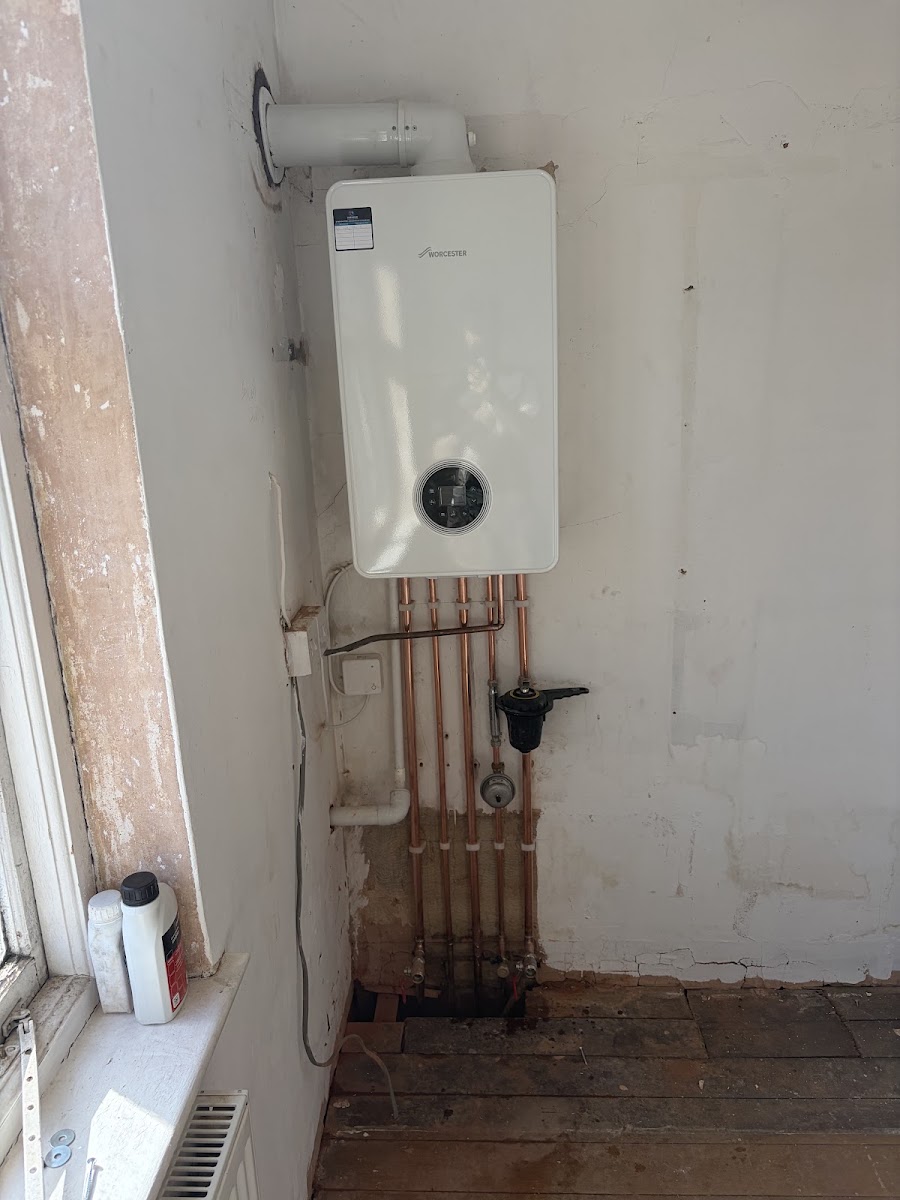
What the job involves
It starts with a look round rather than a price over the phone. How many radiators, how many bathrooms, whether anybody showers at the same time, what the incoming gas main can actually deliver and where a flue is allowed to terminate. Those five answers decide whether you want a combi, a system boiler with a cylinder, or the same again in a different spot.
On the day: isolate and drain down, strip the old unit and its flue out, make good, hang the new boiler, run the gas and the condensate, fit the flue and the terminal, put a magnetic filter on the return, flush the system through with cleaner, refill and inhibit it, then commission and set the controls with you standing there.
Why it matters
Sizing is where most of the regret is. An oversized combi short-cycles — firing and stopping all day, wearing itself out and costing more to run. An undersized one runs out of hot water halfway through the second shower. Neither is a fault you can fix afterwards without buying another boiler.
The gas supply pipe is the other one. A modern boiler asks more of the run from the meter than the appliance it replaced, and if the pipe is undersized the boiler will never make its rated output no matter what the badge says. That gets checked and upgraded before the new one goes on, not after. On the last conversion that meant a new 22mm gas main, and the condensate run out in 42mm.
And the flue. Where it can terminate — the distance from a window, a boundary, an opening, a soil pipe — is regulated, not a matter of taste. It gets designed round the rules on the survey.
Ring it, or write it down
Say what it is doing and roughly where you are. That is usually enough to know whether it is an hour or a morning.