
Heat — the gas side
It has stopped, or it is due
Two different visits that get confused with each other. One is a fault to find. The other is the hour a year that stops the fault happening and keeps the warranty alive.
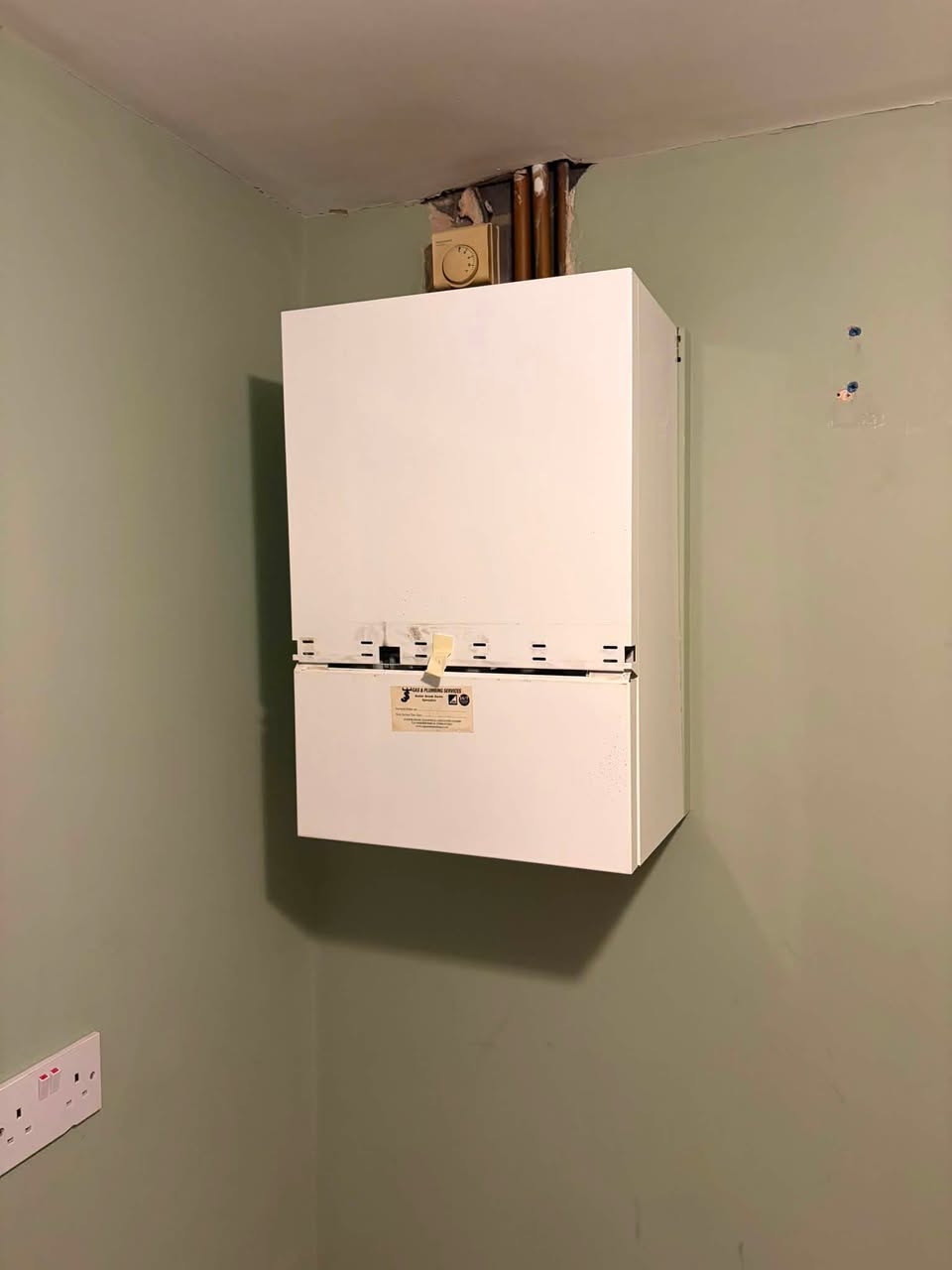
When it has stopped
The useful thing to have ready is the make, roughly how old it is, and whatever the display is showing. A fault code narrows it down enormously before anybody sets off, and it is often the difference between carrying the part and ordering it.
The common ones, in the order they turn up: pressure fallen below a bar and the boiler has locked out, which usually means a weeping radiator valve or an expansion vessel that has lost its charge rather than a boiler fault at all. No hot water but heating fine, which points at the diverter. Kettling and banging, which is the heat exchanger scaling or sludging up. And the frozen condensate every January, which takes ten minutes and a flask of warm water.
What a service actually is
Not a glance and a sticker. The casing comes off, the combustion is analysed at the test point and the readings written down, the burner and heat exchanger are checked and cleaned, the seals and the electrodes are looked at, the condensate trap is cleared, the gas rate is measured against the data plate, the flue is checked inside and out, and the safety devices are proved to operate.
If the readings are out, that is the point of doing it — you find out in October rather than on the coldest night of the year.
Why it matters
Nearly every manufacturer warranty requires an annual service, documented, to stay valid. Miss two years and a five or ten year warranty on an expensive appliance is worth nothing, which is a costly thing to discover at the point you need it.
Ring it, or write it down
Say what it is doing and roughly where you are. That is usually enough to know whether it is an hour or a morning.